English








































































What Is Vehicle Transport? A Beginner’s Guide to Car Shipping

You have packed the boxes, hired the movers, and finalised the closing date on the new house. But there is one massive, 4,000-pound problem sitting in your driveway: your car.
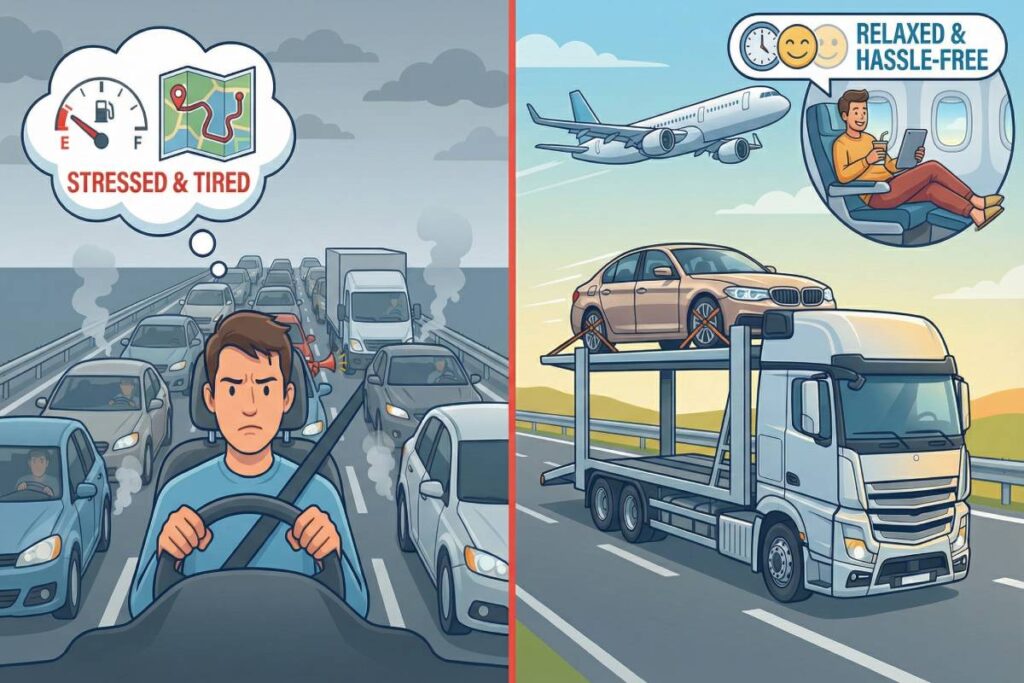
The thought of driving across the country adds hundreds of dollars in fuel, days of exhaustion, and unnecessary mileage to your odometer. It turns an already stressful move into a logistical nightmare. You might be asking yourself, “Is there an easier way to get my car from Point A to Point B without driving it myself?”
The answer is yes.
It is called vehicle transport. Once a service reserved for luxury dealerships and military relocations, it is now an accessible, affordable solution for everyday homeowners. In this guide, we will strip away the industry jargon and explain exactly what vehicle transport is, how it works, and why it might be the smartest move you make this year.
What Is Vehicle Transport
The Core Definition: What Is Vehicle Transport?
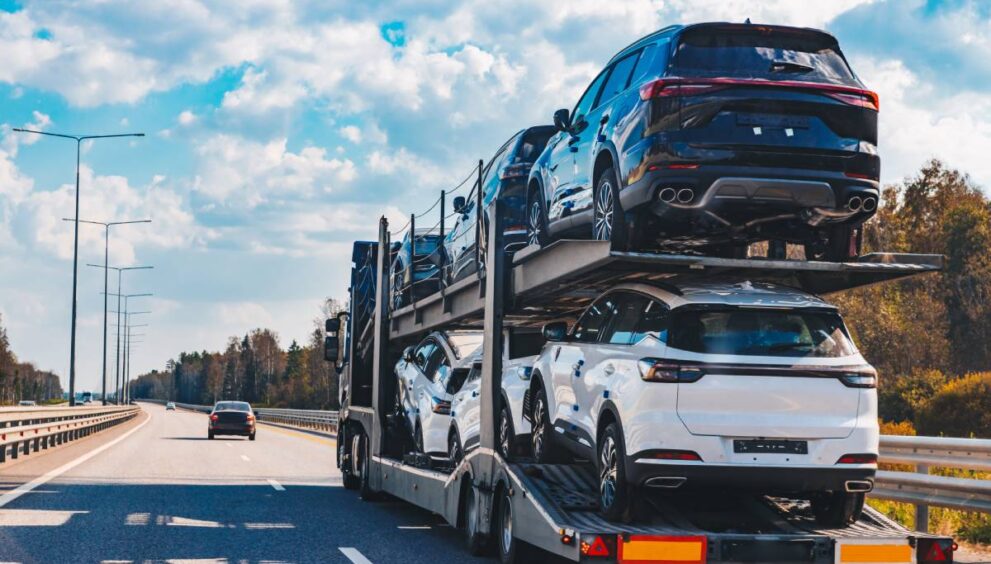
Vehicle transport, also known as auto shipping or car hauling, is the specialised logistics service of moving vehicles from one location to another using a commercial truck. Instead of driving the vehicle yourself, a professional carrier loads it onto a trailer (either open or enclosed) for safe, long-distance delivery.
While it operates differently from standard freight, vehicle transport fits broadly into the 4 types of transportation used in global logistics, specifically optimising road networks for personal assets.
Think of it like a moving truck, but specifically engineered for your car.
While most people associate this service with car dealerships, the industry has shifted. Today, private individuals make up a massive portion of the market. You might need vehicle transport if:
- You are relocating for a job and need your car sent to a new state.
- You bought a car online from a seller 500 miles away.
- You are a “Snowbird” moving south for the winter and want your car with you.
- You are sending a child to college without them having to drive cross-country alone.
How the Process Actually Works (Step-by-Step)
If you have never shipped a car before, the process can feel intimidating. However, it is actually quite streamlined once you understand the workflow. Here is what happens from quote to delivery.
1. Booking the Order
You provide a transport company with your details: origin, destination, vehicle make/model, and desired dates. You will then receive a quote based on current market rates for fuel and carrier availability. For domestic moves, you deal directly with a carrier or broker, unlike complex international shipments, where you might need a freight forwarder to manage customs and multi-modal logistics.
2. The Pickup & Inspection
On the scheduled day, a large truck (the car haulier) arrives. Before the car is loaded, you and the driver will perform a comprehensive inspection.
- Crucial Step: You will sign a Bill of Lading. This document notes existing scratches or dents. Do not skip this; it is your insurance policy if damage occurs during transit.
3. Transit
Your vehicle is secured to the trailer using chains or heavy-duty straps. It does not move during transit. The driver manages the route, weighing stations, and DOT regulations.
4. Delivery and Final Inspection
The driver arrives at your destination. You perform a final walk-around to ensure the car is in the same condition as when it left. Once you sign off, the keys are yours.
Open vs. Enclosed: Choosing Your Carrier
One of the first decisions you will make is choosing the type of trailer. This affects both the cost and the level of protection your vehicle receives.
Open Transport (The Standard Choice)
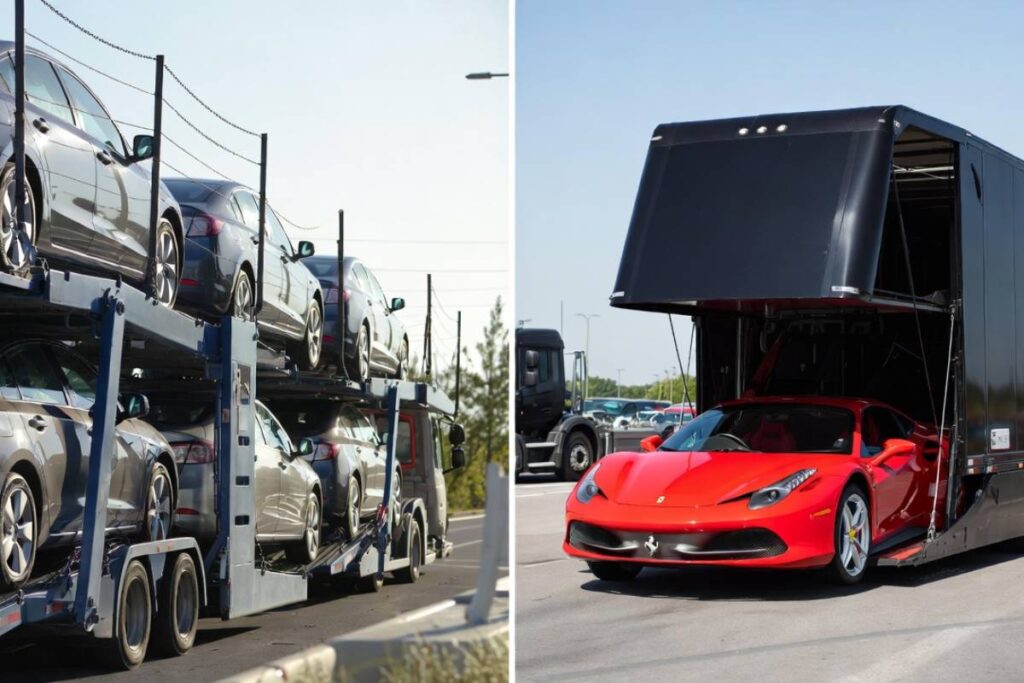
You have likely seen these on the highway—large, two-tier trailers carrying 8 to 10 cars.
- Pros: It is the most affordable option and faster to book because there are more open carriers on the road.
- Cons: Your vehicle is exposed to the elements (rain, dust, road debris).
- Best For: Daily drivers, sedans, SUVs, and used cars. 95% of vehicles are shipped this way.
This is particularly important for modified vehicles; for example, if you have installed essential accessories for your 4×4, like roof racks or lift kits, you may require a carrier with extra clearance.
Enclosed Transport (The VIP Treatment)
These constitute fully covered trailers that look like standard semi-trucks. The vehicles inside are completely shielded from the outside world.
- Pros: Total protection from weather and rocks. Often includes higher insurance coverage and “white glove” service (like lift gates for low-clearance cars).
- Cons: Typically costs 30% to 50% more than open transport.
- Best For: Classic cars, luxury sports cars, antiques, or vehicles with custom paint jobs.
Delivery Options: Door-to-Door vs. Terminal-to-Terminal
Just like shipping a package, you have options on where the vehicle is dropped off.
Door-to-Door Delivery
This is the industry standard for convenience. The trucker gets as close to your front door as legally and safely possible.
- Note: If you live on a narrow street with low-hanging trees or weight restrictions, the driver may ask you to meet them at a nearby large parking lot (like a Walmart or Home Depot) to load/unload safely.
Terminal-to-Terminal
In this model, you drop your car off at a storage depot (terminal), a truck picks it up, and delivers it to another depot where you pick it up.
- Why choose this? It can sometimes be cheaper, or useful if you aren’t available to meet the driver at a specific time.
- The Risk: Terminals are often third-party storage lots. Your car may sit there for days, and liability for damage while it’s sitting in the lot can sometimes be a grey area.
The Cost Equation: Is Shipping Cheaper Than Driving?
This is the most common objection we hear: “I’ll just drive it myself to save money.”
When you look at the sticker price of shipping (which can range from $500 to $1,500+ depending on distance), it seems expensive. But you have to look at the Total Cost of Ownership for the trip.
Let’s break down the hidden costs of driving a car 2,000 miles:
- Fuel: $300 – $500 (depending on MPG and gas prices).
- Accommodation: 3 nights in a hotel ($300 – $450).
- Food: Meals for 3 days ($150+).
- Lost Wages: Can you afford to take 3-4 days off work to drive?
- Wear and Tear: Adding 2,000 miles depreciates your vehicle’s value and brings you closer to your next maintenance interval (tyres, oil change).
The Verdict: Once you add up the hard costs and the value of your time, vehicle transport often breaks even or costs less than driving yourself—without the back pain and stress.
Conclusion
So, what is vehicle transport? It is more than just a truck moving a car. It is a service that buys you time and peace of mind.
Whether you are moving a family SUV across the state or shipping a vintage convertible you just bought at an auction, professional auto shipping bridges the gap. It allows you to fly to your destination, relax, and have your vehicle waiting for you when you arrive.
Don’t let the logistics of moving a vehicle overshadow the excitement of your new journey.
Ready to explore your options? Before you commit to a long, exhausting road trip, get a quote from a reputable specialist like Interstate Towing AU. You might be surprised at how affordable your peace of mind can be.