English





























































What Are the 4 Types of Transportation? (Pros, Cons & Examples)

Transportation is the vascular system of the global economy. Whether you are a business owner figuring out how to ship products or a student studying supply chain mechanics, understanding the core modes of transport is essential.
So, what are the 4 types of transportation?
The four primary types of transportation are Road, Rail, Water, and Air.
Each mode plays a distinct role in the movement of goods and people, offering a unique balance of speed, cost, capacity, and environmental impact. In this guide, we will dissect these four modes to help you understand which is best suited for specific logistical challenges.
Table of Contents
- Road Transportation: The King of Accessibility
- Rail Transportation: The Heavy Hauler
- Water Transportation: The Backbone of Global Trade
- Air Transportation: The Speed of Business
- Comparative Analysis: Choosing the Right Mode
- FAQ
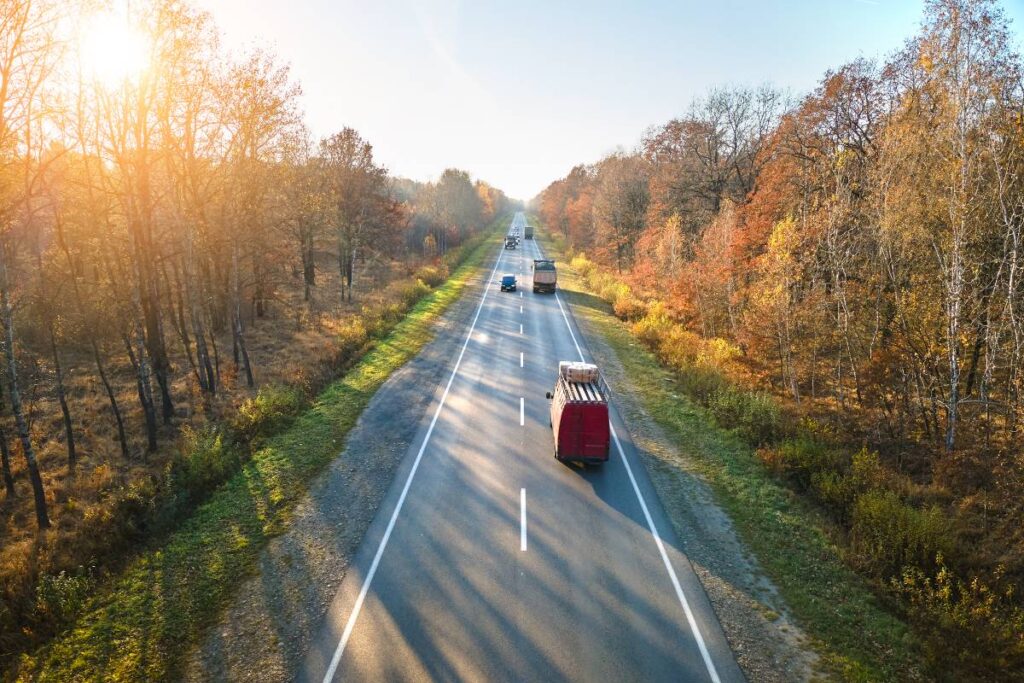
1. Road Transportation: The King of Accessibility
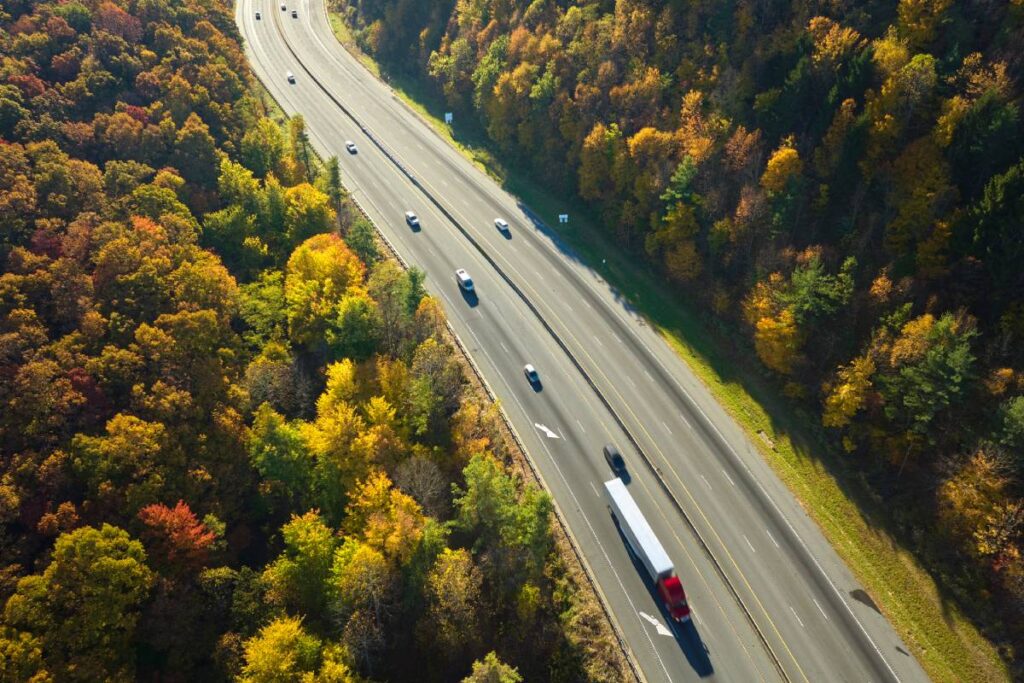
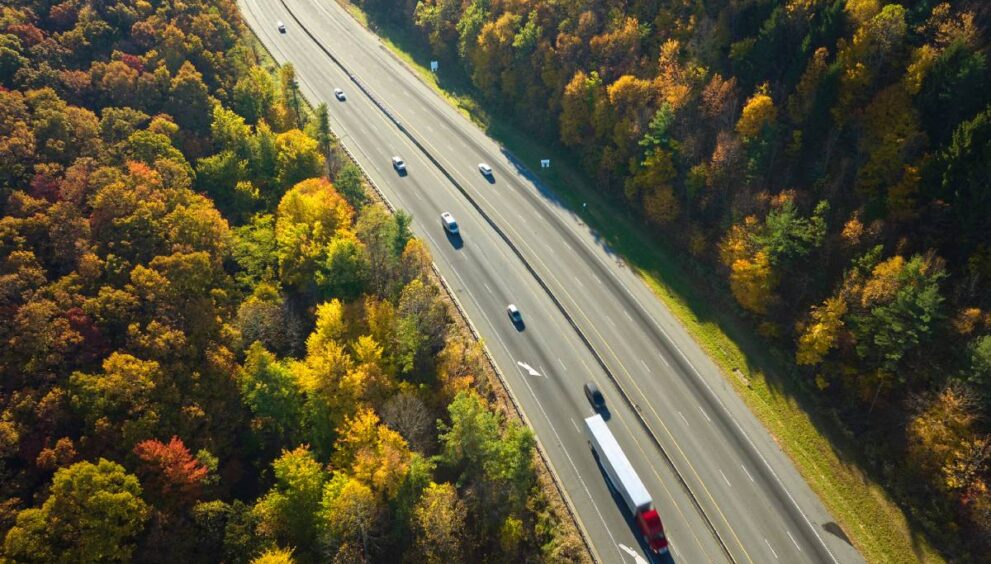
Road transportation is the most ubiquitous form of transport in the world. From the semi-truck on the highway to the delivery van on your street, road transport is the only mode that offers true “door-to-door” service.
How It Works
It relies on road infrastructure (highways, streets) and vehicles ranging from cars and buses to heavy-duty commercial trucks. In logistics, it is the primary method for short-distance delivery and the essential “last mile” link for other modes.
It is also the critical mode for specialised, heavy movements that don’t fit into standard shipping containers. For example, niche logistics operations like Interstate Caravan Transport AU rely entirely on specialised road networks to move large recreational vehicles across the continent, accessing remote areas that rail and air simply cannot reach.
Key Advantages
- Flexibility: Trucks can go anywhere there is a road, unfettered by fixed tracks or ports.
- Door-to-Door Service: Goods are loaded at the warehouse and unloaded at the customer’s doorstep.
- Lower Packing Costs: Goods require less heavy-duty packing compared to the rigors of ocean freight.
- Tracking: GPS allows for real-time tracking of individual vehicles.
Disadvantages
- Capacity Limits: A truck cannot carry the volume of a train or ship.
- Traffic & Weather: Vulnerable to delays caused by congestion and road conditions.
- Environmental Impact: High carbon emissions per unit of weight compared to rail.
While maritime shipping is cost-effective, the documentation can be overwhelming; this is why many importers rely on professional freight forwarding assistance to navigate complex customs regulations and avoid port delays.
Pro Tip: Road transport is rarely used for transcontinental shipping alone. It is best utilised for distances under 400 miles or for the final delivery leg of a longer journey.
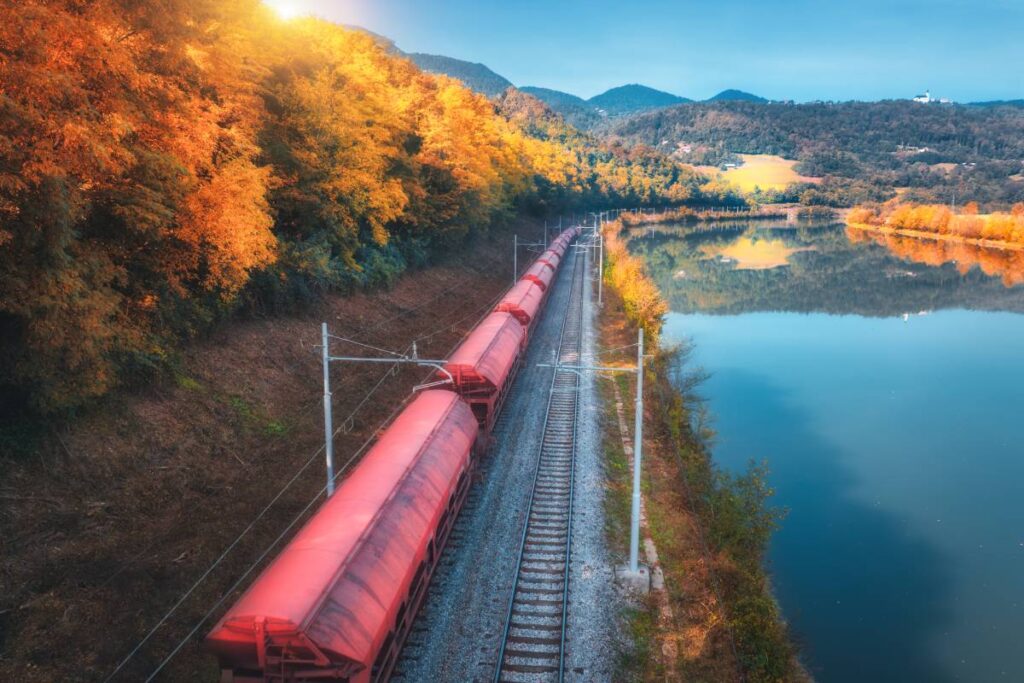
2. Rail Transportation: The Heavy Hauler
When it comes to moving massive volumes of goods over land, rail transportation is unrivalled. It is the preferred method for heavy, bulk commodities like coal, grain, steel, and raw materials.
How It Works
Rail transport utilises locomotives pulling a series of cargo wagons along fixed tracks. It is a critical component of “intermodal” transport, where containers are moved from ships to trains, and finally to trucks.
Key Advantages
- High Capacity: One freight train can carry the equivalent load of hundreds of trucks.
- Cost-Effective: For long-distance inland travel (over 500 miles), rail is significantly cheaper than road transport.
- Eco-Friendly: Trains are roughly 3-4 times more fuel-efficient than trucks on a ton-mile basis.
- Reliability: Trains run on fixed schedules and are less affected by weather or traffic jams.
Disadvantages
- Lack of Flexibility: Trains are bound to tracks. They cannot deviate to a specific warehouse that isn’t rail-served.
- Capital Intensive: Building and maintaining rail infrastructure is incredibly expensive.
- Slower Delivery: Rail is generally slower than road transport for short distances due to the time required to assemble trains at terminals.
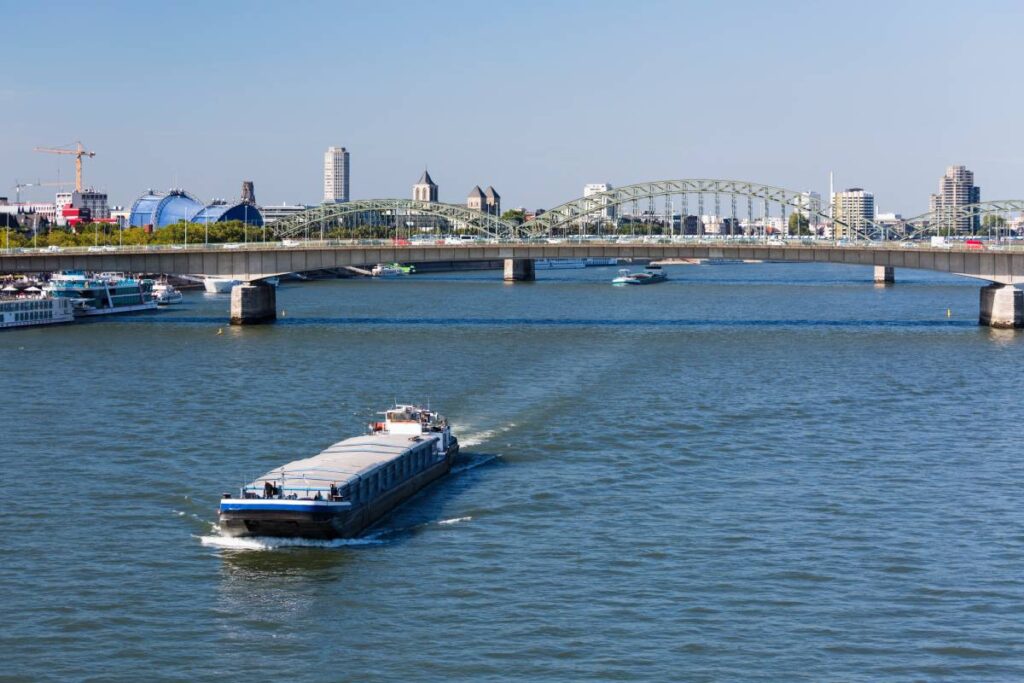
3. Water Transportation: The Backbone of Global Trade
If you look around the room you are in right now, 90% of the manufactured items you see likely spent time on a ship. Water transportation is the dominant force in international trade.
While maritime shipping is cost-effective, the documentation can be overwhelming; this is why many importers rely on professional freight forwarding assistance to navigate complex customs regulations and avoid port delays.
How It Works
This category is divided into two main sectors:
- Maritime (Ocean) Transport: Massive container ships, tankers, and bulk carriers crossing oceans.
- Inland Water Transport: Barges moving along rivers (like the Mississippi or the Rhine) and canals.
Key Advantages
- Massive Economies of Scale: A single large container ship can carry over 20,000 TEUs (Twenty-foot Equivalent Units). This makes the cost per unit incredibly low.
- Global Reach: It is the only viable way to move high volumes between continents.
- Ideal for Bulky Goods: Perfect for cars, machinery, oil, and grain.
Disadvantages
- Speed (or lack thereof): It is the slowest mode of transport. A shipment from China to the US can take 15 to 40 days.
- Port Dependency: Ships can only dock at specific ports with deep drafts and specialised cranes.
- External Risks: Vulnerable to piracy, port strikes, and canal blockages (like the Suez Canal obstruction).
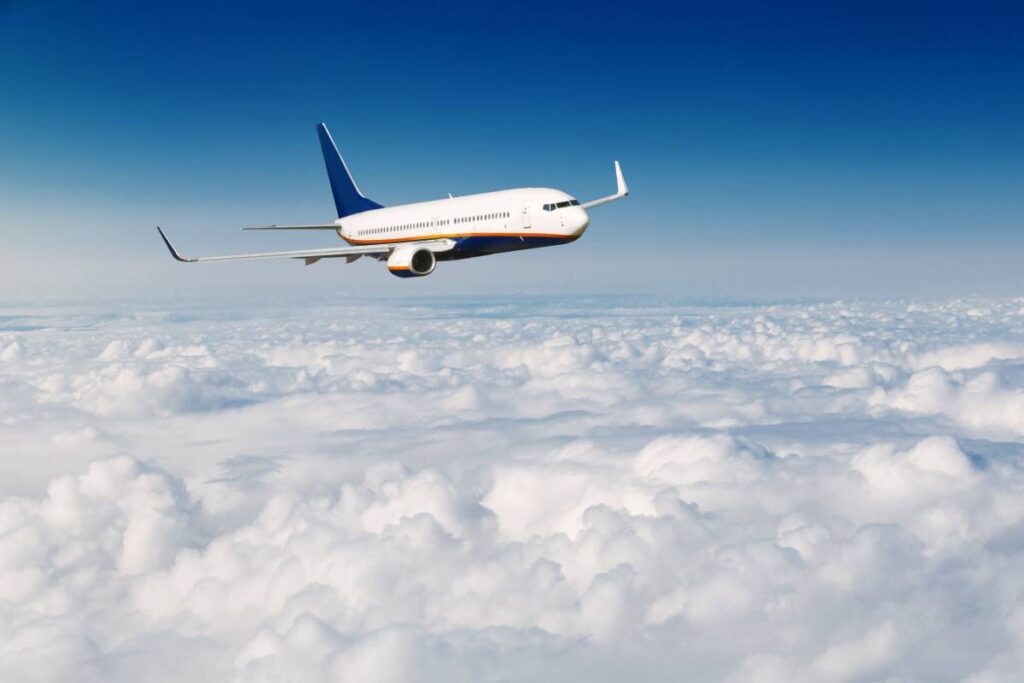
4. Air Transportation: The Speed of Business
When time is money, air transportation is the solution. It is the newest mode of transport and serves the “just-in-time” needs of the modern economy.
How It Works
Air transport utilises passenger aircraft (belly cargo) and dedicated freighter aircraft to move goods between airports.
Key Advantages
- Speed: What takes weeks by boat takes hours by plane. It is the fastest way to bridge long distances.
- Security: Airports have rigorous security measures, reducing the risk of theft and damage.
- Inventory Reduction: Because delivery is so fast, businesses don’t need to stockpile massive amounts of inventory, freeing up cash flow.
Disadvantages
- Cost: It is by far the most expensive mode of transport. Air freight can cost 12-16 times more than ocean freight.
- Weight/Size Limitations: Aircraft have strict payload limits and door sizes. You cannot ship a bulldozer by air easily.
- Weather Dependent: Flights are easily grounded by storms or fog.
5. Comparative Analysis: Choosing the Right Mode
To help you visualise the differences, here is a direct comparison of the 4 types of transportation based on critical logistics factors.
| Feature | Road | Rail | Water | Air |
| Speed | Moderate | Slow/Moderate | Slowest | Fastest |
| Cost | Moderate | Low | Lowest | Highest |
| Capacity | Low | High | Highest | Low |
| Reliability | Moderate (Traffic) | High | Moderate (Weather) | High |
| Best For | Local/Regional | Bulk/Long Distance | Global Trade | Urgent/High Value |
Which one should you choose?
- Choose Road for flexibility and distances under 500 miles.
- Choose Rail for heavy bulk goods moving across a continent.
- Choose Water for international shipping where cost is more important than speed.
- Choose Air for perishables, electronics, or emergency supplies.
6. Frequently Asked Questions (FAQ)
Q: What is the safest mode of transportation? Statistically, air transportation is considered the safest mode for passengers. For cargo, rail and air both offer high security and low accident rates compared to road transport.
Q: What is Intermodal Transportation? Intermodal transportation refers to moving freight using two or more modes of transport (e.g., Ship -> Rail -> Truck) without handling the freight itself when changing modes. This is made possible by standardised shipping containers.
Q: Which mode of transport is the most environmentally friendly? For moving goods, Water and Rail are the most eco-friendly options, producing significantly fewer carbon emissions per ton-mile than Road or Air transport.